The question I get asked most is some version of “where do we start with AI?” My answer is nearly always the same. Don’t start with AI. Start with how the work moves through your business.
Start with the workflow, not the tool
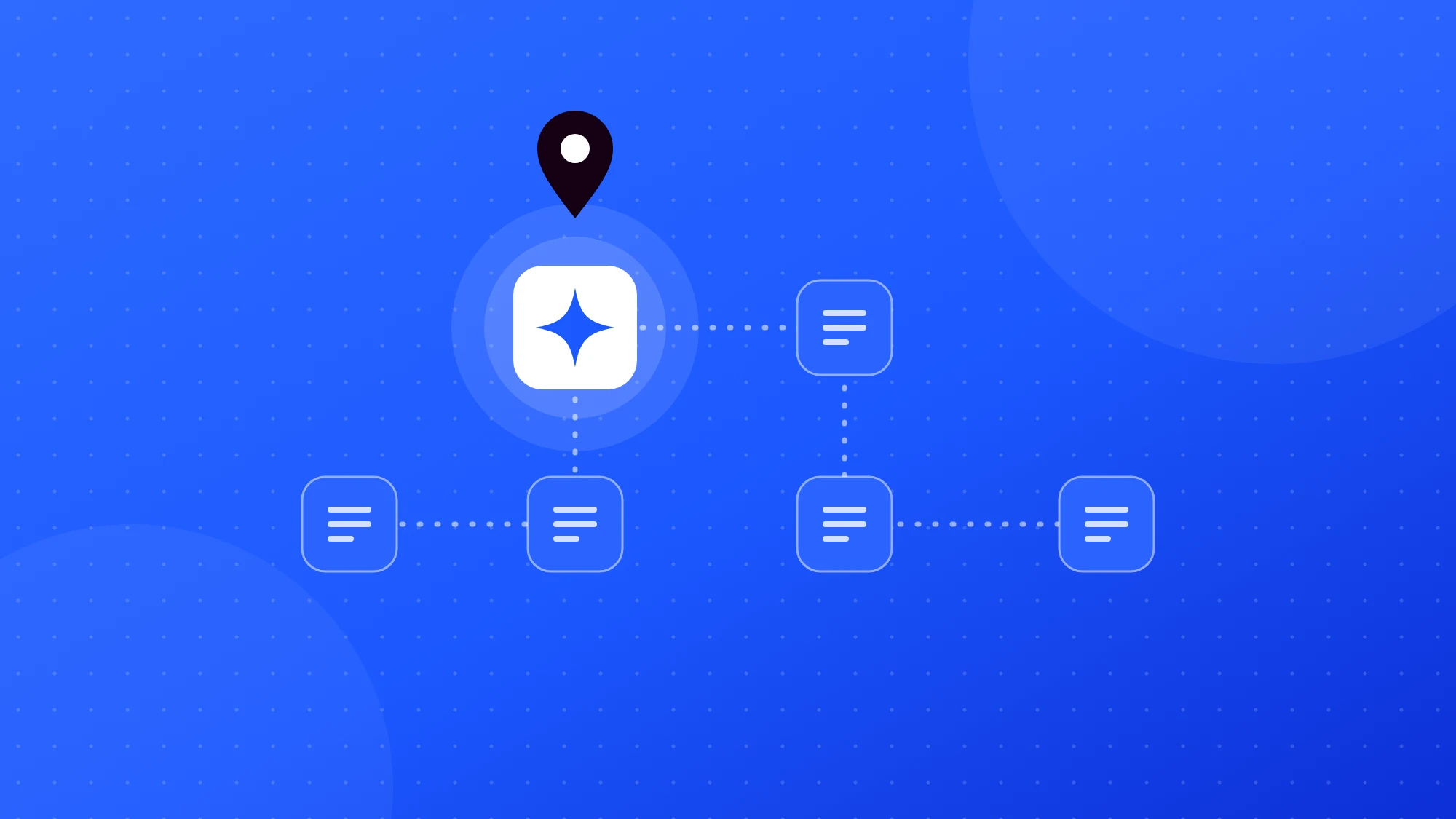
Every business has a path the work follows. A job comes in, it goes to the office, it gets prepared, it gets produced, it gets delivered, it gets signed off. A to B to C. When you map that path honestly, you find the same things almost every time: repeated administration, clumsy handoffs between teams, and a lot of duplication.
That map is where the opportunities are. Not in a list of AI features.
The first step I give a client is simple: identify your five key workflows. How work actually flows through the business, and how it’s handed on step by step. Once you can see that, you can see where things slow down.
Not every problem is an AI job
Callum Wilkinson, Veda AI’s Technical Director, puts it this way: not every problem is an AI job. We both live by that. This is the bit that surprises people, given what I do. A lot of what you find on that map doesn’t need AI at all. Traditional software and a straightforward integration will do it, and do it better.
There are plenty of people throwing AI at everything. But AI can give you a different output each time, and it can cost more to run than a standard integration. For a task that has to be right every single time, that’s the wrong tool. Part of my job is bridging the gap between the two and being honest about which one a problem needs.
So we work from the bottom up. First, what can we do with normal automation, ordinary software and the tools already in your stack? Then, do we need to build anything custom? AI comes in once the data underneath it is right.
Ask what the problem really is
I was looking at automating a label for one business recently. I assumed the win was speed. When I dug into it, it wasn’t about speed at all. It was about accuracy, because people were getting it wrong and the mistakes were expensive further down the line.
That changes what you build. It’s why I’d always rather sit with the people doing the work and find the actual problem than go looking for a quick fix. You don’t want to do it twice.
AI does 80%. Your people own the last 20%
What I see across a lot of industries is this: if AI doesn’t get you all the way there but does 80% of the work, and somebody goes in and does the last 20%, you’ve still saved a huge amount of time. And that 20% isn’t a weakness. It’s your control. It’s how you get what you actually wanted.
I got asked about poor-quality AI output on a panel, and my answer was that it comes down to laziness. We’ve been handed something that makes us more efficient, and instead of asking how we get to the same quality faster, some people have just dropped the quality. There are two good ways to use the time AI gives you: the same quality, faster, or better quality in the same time. Lower quality isn’t one of them.
Measure before you touch anything
Before I change a process, I want to know how long it takes today and how many people are involved. Afterwards, I want to know how much time it actually saved. Without that measurement you don’t know if it’s had any effect at all.
It also tells you what’s worth working on. If one task takes an hour and another takes ten minutes, and you can save 20% on both, the hour-long one is obviously where the impact is. Over time those numbers show you what to keep doing and what to leave alone.
Pick the low-effort, high-impact work first
Once the opportunities are on the table, I plot them by effort and by impact, and start with the ones that are lowest effort and highest impact. It sounds simple, but it stops a business sinking months into the most exciting idea while the easy wins sit untouched.
Make someone accountable for the number
Consultants get a bad reputation in this space, and some of it is earned. Somebody comes in, tells you that if you swap this for that you’ll save a certain amount, and leaves you with a PDF. By the time you’ve found a provider and tried to implement it, nobody is accountable for that number apart from the document it was written on.
That’s why I’ve kept the build side of what I do. If I tell you something will pay back, I want to be the one who delivers it, and I’ll put my name to the outcome. Whoever you work with, ask them the same thing: who is accountable for the result?
Where to begin this week
Pick one workflow that matters. Map it from start to finish. Mark where the duplication is, and be honest about which fixes need AI and which just need better software. Time it. Then start with the smallest change that makes the biggest difference.
Let’s talk
If this struck a chord, I’d like to hear what you’re building.