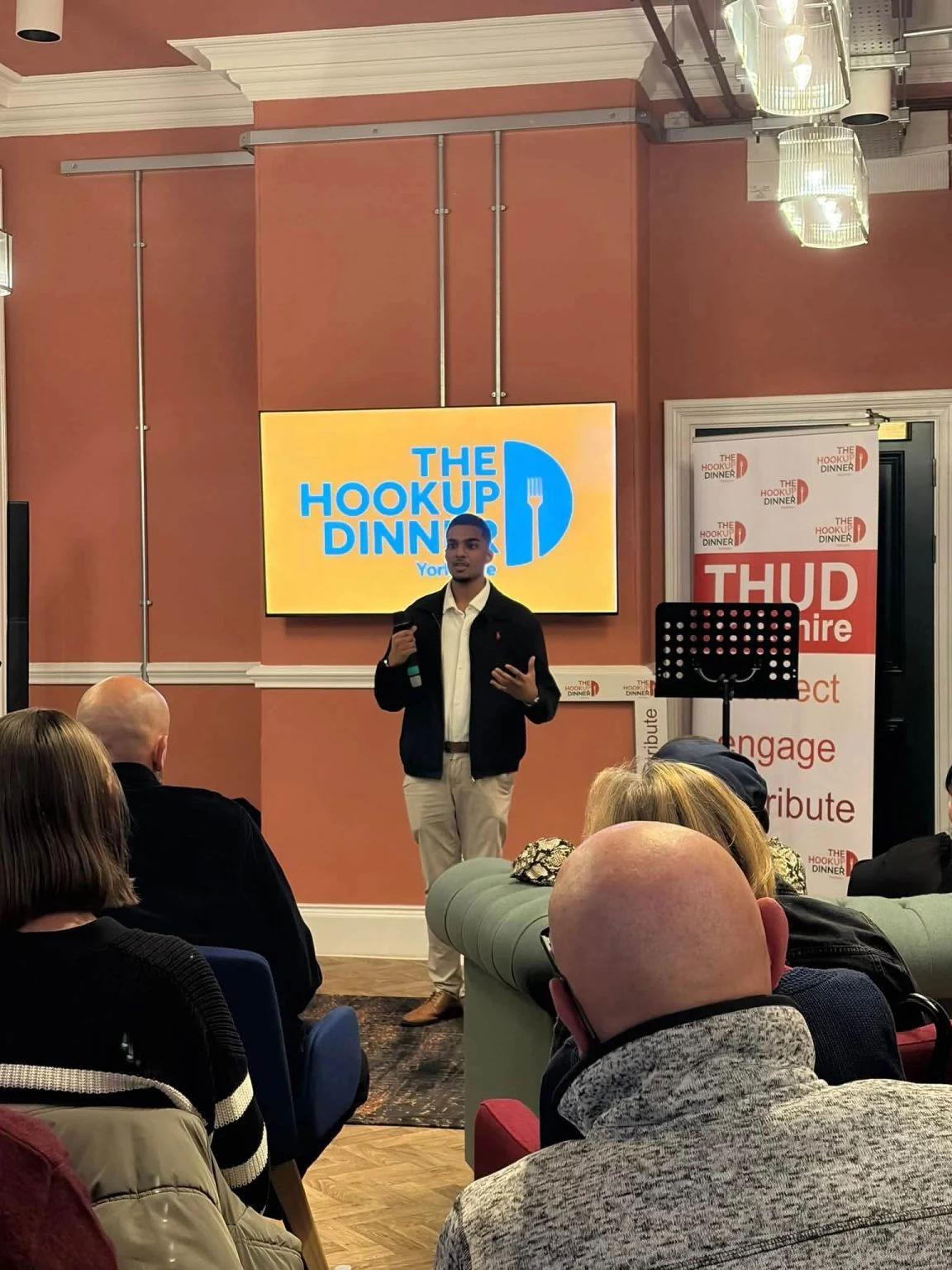
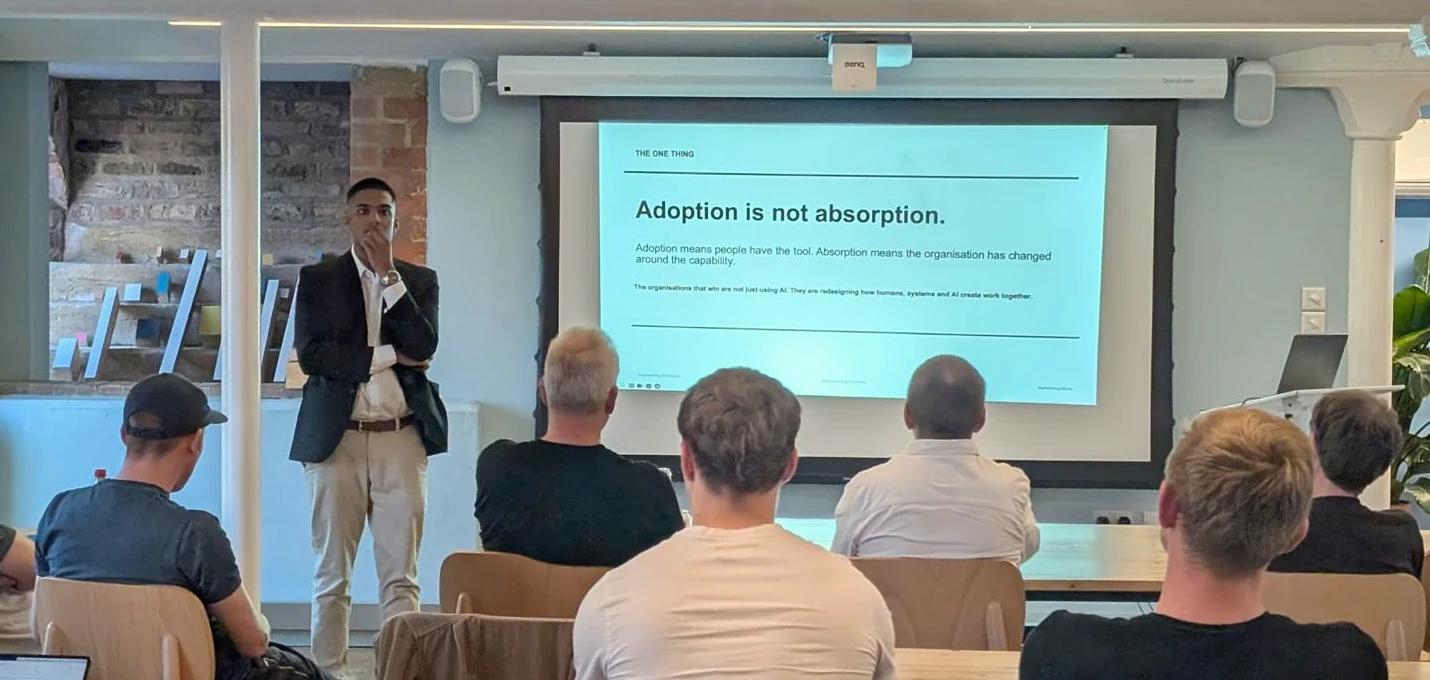
In August I gave a talk at Slurp ’n Learn on something I keep seeing in businesses. They’ve adopted AI. They haven’t absorbed it. This is the short version. It was one of my first talks, and I was a little nervous. The room enjoyed it, which helped.
Adoption is racing ahead
AI is being picked up faster than the technology waves before it, which leaves organisations far less time to adapt. Adoption means people have the tool. Absorption means the organisation has changed around what the tool makes possible. The first can race a long way ahead of the second.
Three gaps I keep seeing
The first is a capability gap: AI gets used in pockets, with no shared understanding of what actually creates value. The second is a structural gap: roles, workflows, decision rights and authority stay exactly as they were. The third is a control gap: nobody is evaluating what the AI does, so compliance breaks and data ends up in the wrong places.
What it looks like in real life
We took over from a previous provider at a decent-sized business. They’d had plenty of AI work done, and what they had was a lot of adoption and no absorption. There was shadow AI everywhere, agents built all over the place, and workflows that weren’t the simplest way to solve the business case they were meant to solve. None of it was joined up, and nobody in the business really knew what was going on.
So we turned it around. We made sure everything was actually serving the business case, and we made sure the knowledge and awareness stayed inside the business. That second part is the difference. If the understanding lives with a supplier, the organisation hasn’t absorbed anything.
AI-added or AI-native
An AI-added business keeps the same workflows and the same roles, with AI bolted on top. An AI-native business redesigns the work from first principles, with AI as a structural part of how it gets done. Most businesses are AI-added and wondering why nothing has changed.
Start with the work
Before you design AI into anything, make four things visible. The outcome: what are we trying to achieve? The flow: what does it look like end to end? The friction: where does it wait, repeat, get reworked or lose context? And the judgement: what are the stakes, the exceptions and the edge cases? Then decide what kind of work each task is: human-led, human plus AI, AI-run or system-governed. Not every task should be automated.
Autonomy is a design choice
How much an AI is allowed to do is an architecture decision, not a question of how capable the model is. I think of it as a ladder: assist, recommend, approve, act, orchestrate. Every step up needs an identity, the right access, clear policies and a way of evaluating what it did.
When execution gets cheap
Once doing the work gets cheap, the bottlenecks move. They become decision-making, coordination, organisational knowledge and governance. One MD I work with told her right-hand man to stop sending her documents, because plans were arriving faster than the business could act on them. The human edge becomes more visible, not less: judgement, taste, trust, relationships and accountability.
Where to begin
Don’t try to transform the whole company. Map your five highest-volume workflows and redesign one meaningful piece of work at a time. Every workflow you redesign produces a signal. The businesses that capture what works, and keep iterating, are the ones that compound.
Want this at your event?
I give this as a talk, panel or workshop, tailored to the room.